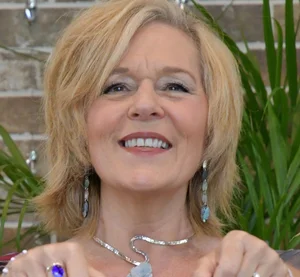
Before a sound comes out, there's already a lifetime underneath it.
After decades of working with my own voice and more than 20 years teaching others, I've come to realize something that has completely changed the direction of my work. Many of the struggles we experience with our voices aren't really about the voice itself.
Now, don't get me wrong. Vocal technique is important, and I spent many years studying classical singing and teaching others how to develop their voices. I loved that work, and I still appreciate the beauty and artistry of a well-trained voice.
But over the years, I began noticing something that fascinated me. There was often so much more going on with my students than simply learning how to breathe properly, improve their resonance, or sing a particular phrase.
There was an entire life lived underneath that voice.
All the experiences that shaped them, the things they'd been told about themselves, the emotions they'd learned to hide, and the moments when they'd decided it might be safer to keep quiet than to express what they were really feeling. And I began to wonder how much of that history was influencing the way they used their voices.
What Happens When You Ask Someone to Just Make a Sound?
I remember working with students who could sing beautifully, yet when I asked them to simply make a sound to help free their voice, something interesting would happen. I'd say something like, "Okay, now just yell, like you’re calling someone. Just let out a big, loud HEY!" And you know, almost all of them just couldn’t do it. Some would laugh nervously, others would become visibly uncomfortable and others just give me a deer in the headlights look.
I found this almost unbelievable. Here were people who were relatively comfortable with using their voices for singing, yet making one spontaneous, organic sound felt almost impossible. And it got me thinking. What were they really afraid of?
After all, think about how freely we used our voices when we were little. Babies cry, squeal, growl, babble, laugh, and make all sorts of wonderfully strange noises. They're just having a grand time exploring their voices without worrying about how the sound. Of course, as we grow up, we learn how to communicate and adapt to the world around us. But somewhere along the way, many of us also get the message that being fully self expressed is not always safe.
Maybe we were told to stop being so loud, not to cry, not to make a scene, or to be a good little girl or boy and behave ourselves. Perhaps we learned that expressing anger made someone withdraw their affection, or that speaking up created conflict. I remember my mom would give me the silent treatment, sometimes for days, without telling me what I did or said to upset her. Looking back, I can see how experiences like that can teach us to become very careful with our words, constantly questioning what we say and how we say it, for fear of upsetting someone or losing their affection.
Which raises an interesting question: How much of the way you use your voice today is truly yours, and how much of it was shaped by what you learned?
Your Body Has Something to Say, Too
Have you ever wanted to say something important, perhaps establish a boundary or tell someone how you really feel, and suddenly noticed your throat tightening? Maybe your breath became shallow, your stomach clenched, or you found yourself searching for just the right words so you wouldn't upset anyone.
Oh boy, do I know that feeling.
Sometimes we don't even realize how much we're holding back until we begin paying attention to what's happening inside our bodies. And that's one of the things that eventually changed my own relationship with my voice. For years, I'd been focused on developing and refining my sound. I was classically trained, and I loved singing. But I also became very concerned with getting things right, meeting expectations, and producing the sound I thought I was supposed to make.
It took me a long time to realize that there was nothing inherently wrong with my voice. It didn't need to become more perfect. What needed to change was my relationship with it. Instead of continually asking myself, "How should I sound?" I began asking a very different question.
"What does the voice of my body want to say?"
And that question opened up an entirely different way of exploring sound.
I began listening more closely to how sound actually felt inside me. I noticed the vibration of a hum in my chest, how a long, audible sigh could help me release tension almost immediately, and how allowing a sound to emerge without trying to shape it could sometimes bring an unexpected emotion into my awareness.
It was less about making a particular sound and more about becoming curious about what I was experiencing. And I found that the more I listened, the more connected I began to feel to myself.
What Happens When We Combine Sound and Somatic Movement?
This is where things got even more interesting…as I continued exploring the relationship between sound, breath, and the body, I began incorporating more organic sounding and somatic movement into my work.
And I started noticing how differently people responded when they were invited to experience their voices rather than concentrate on how they sounded. Think about it. When we're frustrated, we might groan. When we're relieved, we sigh. When something delights us, we laugh, sometimes with our whole bodies. Sound and movement are already naturally connected in so many of our everyday experiences.
But what happens when we begin exploring that connection intentionally?
Perhaps you allow yourself to sigh while stretching your arms, or hum while slowly swaying your body. Maybe you experiment with a vowel sound and notice where you feel the vibration, or discover that moving your shoulders while sounding helps you become aware of tension you hadn't noticed before. There's no particular sound you have to make or outcome you have to achieve. You're simply becoming curious about what happens when you allow your breath, body, and voice to work together
I've witnessed some remarkable experiences through this kind of exploration, both in myself and in the people I've worked with.
Sometimes a person's breathing changes. They notice their shoulders relaxing, or they become aware of an emotion that had been sitting just beneath the surface. Other times, they simply feel more present, more connected, or more comfortable allowing their voice to be heard. We know that breathing, vocalization, and movement interact with our nervous system, but what interests me most is what people actually discover for themselves. It's almost as though we're giving our bodies an opportunity to remember a more natural way of expressing.
Maybe Your Voice Doesn't Need Fixing
Here's something else I've been thinking about lately. How often do we approach ourselves as though there's something that needs to be corrected or improved? We want to be more confident, more expressive, more courageous, more comfortable speaking up.
But what if some of that growth begins not by trying to become something more, but by becoming curious about what has been holding us back? For instance, the next time you feel embarrassed making an unfamiliar sound, instead of immediately dismissing the feeling, just sit quietly with it and ask "Why does this feel so silly?” You might even imagine asking that younger part of yourself what happened along the way.
I find these questions fascinating because they invite us to explore our relationship with expression without immediately judging or trying to change anything. Sometimes simply recognizing an old pattern gives us an opportunity to respond differently. And perhaps that's where we begin reclaiming a little more freedom.
Not by forcing ourselves to be louder, bolder, or more expressive than we're comfortable being, but by creating opportunities to explore our voices without the constant need to monitor or judge them.
Remembering Your Soul Voice
Looking back, I can see how my entire life has been preparing me for the work I do today.
My years as a singer, my decades teaching voice, and my own experiences of learning to listen more deeply to my body have all brought me to this understanding: our voices are connected to so much more than the words we speak or the sounds we make. They're connected to how we feel about ourselves, how we relate to others, and how safe we feel allowing ourselves to be seen and heard.
And I believe that when we begin exploring our voices with curiosity, compassion, and a willingness to experiment, we may also begin reconnecting with parts of ourselves we've forgotten or learned to keep hidden.
That's really what inspired me to create Remembering Your Soul Voice, my free monthly virtual voice healing community.
It's a space where we explore these ideas together through conscious listening, sounding, somatic movement, and shared reflection. We become curious about the stories and patterns we've carried, and what might happen when we begin relating to our voices differently. Because perhaps your voice was never something you needed to fix in the first place. Perhaps what you've been longing for is the freedom to express more of who you already are.
And maybe, just maybe, your body has been waiting for you to listen.